
email
info@aonmining.comCALL US
+8616638337976
CALL US
+8616638337976
Buying a crusher comes down to six decisions, and the order matters: know your material, fix your target capacity, define your finished product, match the flowsheet, budget the total cost of ownership, then vet the supplier. Get the first three right and the machine almost chooses itself. Get them wrong and no discount will rescue the project.
This guide walks through all six, with the numbers you actually need to send to a manufacturer for an accurate quotation.
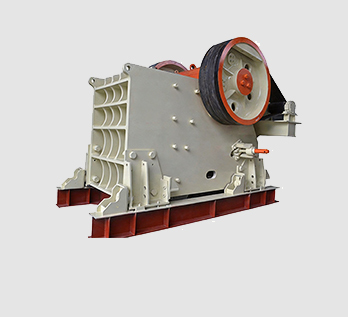
Everything starts here. Two machines with the same capacity can cost very different amounts to run, depending on what you feed them.
Four properties decide the crusher type:
Hardness (Mohs scale): how much force it takes to break the rock
Abrasiveness: how fast it chews through wear parts
Moisture content: whether it blinds screens and blocks chambers
Maximum feed size: the largest lump your loader will dump in
A simple rule of thumb by hardness:
High silica content changes the answer even at the same hardness: abrasive rock wears impact blow bars quickly, so a cone crusher is usually cheaper to run over five years even when it costs more upfront.
State your required output in tonnes per hour (t/h) based on real operating hours, not on peak demand. Then add margin.
The standard practice is to size each crusher 10 to 20 percent above the required output. Real feed is never as uniform as the catalogue figure assumes. Wet, sticky or slabby material reduces throughput, and a line running at 100 percent of design has no room to recover.
Also check that the stages balance. A 300 t/h primary feeding a 150 t/h secondary does not make a 300 t/h plant — it makes a bottleneck. The weakest stage sets the plant capacity.
Capacity without a product spec is only half a brief. You need:
Particle size ranges: for example 0-5 mm, 5-10 mm, 10-20 mm, 20-31.5 mm
Particle shape: cubical aggregate for concrete and highway work
Gradation standard: the standard your market enforces
Fines target: for manufactured sand, the fineness modulus, for example 2.4-3.2
If you sell into highway or bridge construction, particle shape is not optional. Flaky, elongated aggregate fails the shape requirement and reduces the price your product can fetch. This is the single most common reason a plant is upgraded within two years of being built.
The number of crushing stages follows from Steps 1 to 3.
Two-stage: jaw + cone (or impact) + screen. For a single, simple product range and medium hardness. Lower capital cost, fewer maintenance points.
Three-stage: jaw + cone + VSI, or cone + screens. For hard rock plus a manufactured sand product, or for a tight shape specification. Higher capital cost, better product control.
Mobile: tracked or wheel-mounted jaw, cone or impact modules. For contractors working across several sites, or short-term projects where a fixed foundation is not worth building.
A flowsheet is not a product list. The right question to ask a supplier is not “what does this crusher cost”, but “what flowsheet do you recommend for my material and product spec, and why”. If they answer with a price before they answer with a flowsheet, keep looking.
Three-stage flowsheet
Raw feed → Vibrating feeder → Jaw crusher (primary)
→ Cone crusher (secondary) → VSI sand maker (tertiary)
→ Vibrating screens → Products: 0-5 / 5-10 / 10-20 / 20-31.5 mmFor a full walkthrough, see how our EPC project workflow runs from inquiry to commissioning.
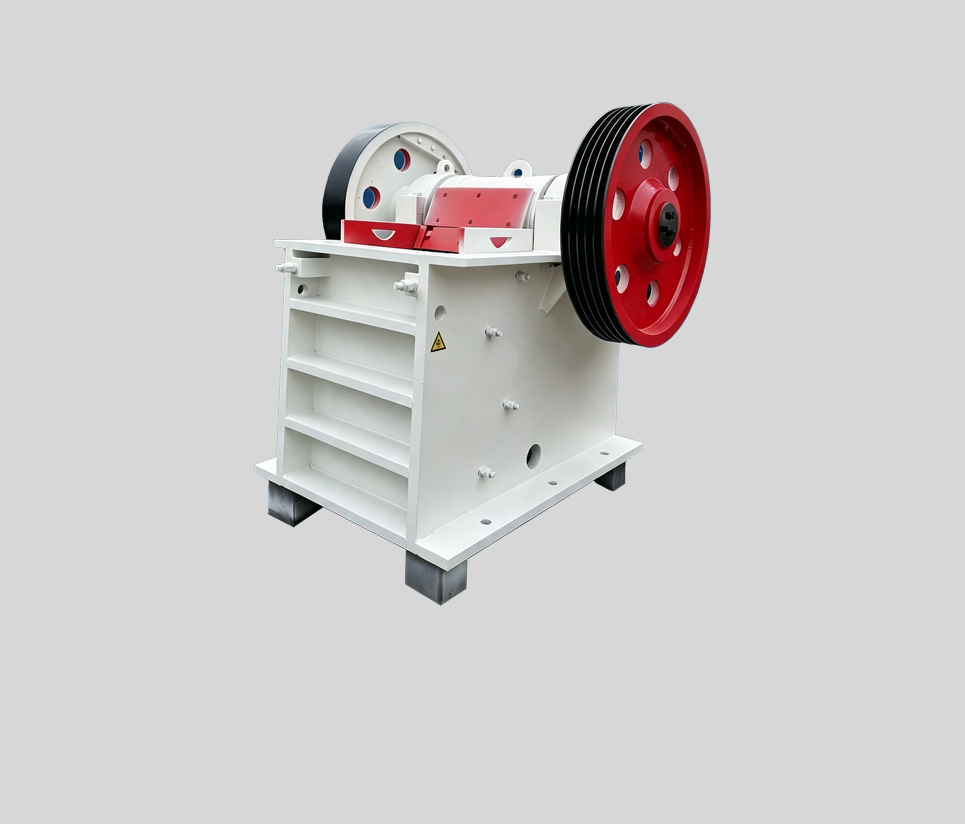
The purchase price is roughly a third of what the machine will cost you. Plan for the rest:
Purchase price: crushers, feeders, screens, conveyors, motors
Freight and logistics: sea freight, inland transport, unloading
Civil works: foundations, retaining walls, access roads
Electrical: transformer, cabling, control panel
Wear parts: jaw plates, mantle and bowl liners, blow bars
Maintenance: labour, lubricants, scheduled downtime
Power: the largest recurring cost in most plants
Wear parts and power dominate the lifetime cost of a crushing plant. Two quotations that differ by 20 percent on price can reverse completely once you price the wear parts over three years. Always ask for the wear part list and its expected life in tonnes.
Once the technical brief is clear, the last decision is who to buy from. Verify the legal entity, confirm they actually manufacture, ask for reference projects you can contact, and test whether they can produce a proper flowsheet and general arrangement drawing rather than just a price. We cover this in detail in our separate guide on verifying a Chinese crusher manufacturer.
Buying on price alone, then discovering the wear cost.
Comparing quotes with different scopes of supply — one includes motors and steel structure, the other does not.
Undersizing the primary crusher to save on capital.
Ignoring the local availability of wear parts.
Skipping inspection before shipment.
Signing a contract without a written, itemised specification.
Q: How do I choose between a jaw crusher and a cone crusher?
A: By crushing stage. A jaw crusher is the primary machine because it accepts large blasted rock; a cone crusher is the secondary or tertiary machine because it produces better shape and lower wear cost.
Q: What capacity do I need?
A: Base it on your real operating hours and target product mix, then add 10 to 20 percent margin, and check that every stage in the flowsheet can carry that figure.
Q: How long does delivery take?
A: Standard machines are typically ready in 15 to 30 days; a complete customised line takes longer. Confirm the schedule in writing, including the shipping period to your port.
Q: What information do you need to quote accurately?
A: Material type and hardness, maximum feed size, required output sizes and shape, target capacity in t/h, and your destination port. With those five details we can propose a flowsheet and a quotation.
Send us your material type, maximum feed size, target output size and required capacity. Our engineers will come back with a recommended flowsheet and a quotation, usually within 24 hours.
Email: info@aonmining.com
WhatsApp: +86 166 3833 7976
Website: www.aonmining.com
AON Mining Equipment Co., Ltd. — Zhengzhou, China
19 years in aggregate and mining equipment, 300+ EPC projects delivered.

